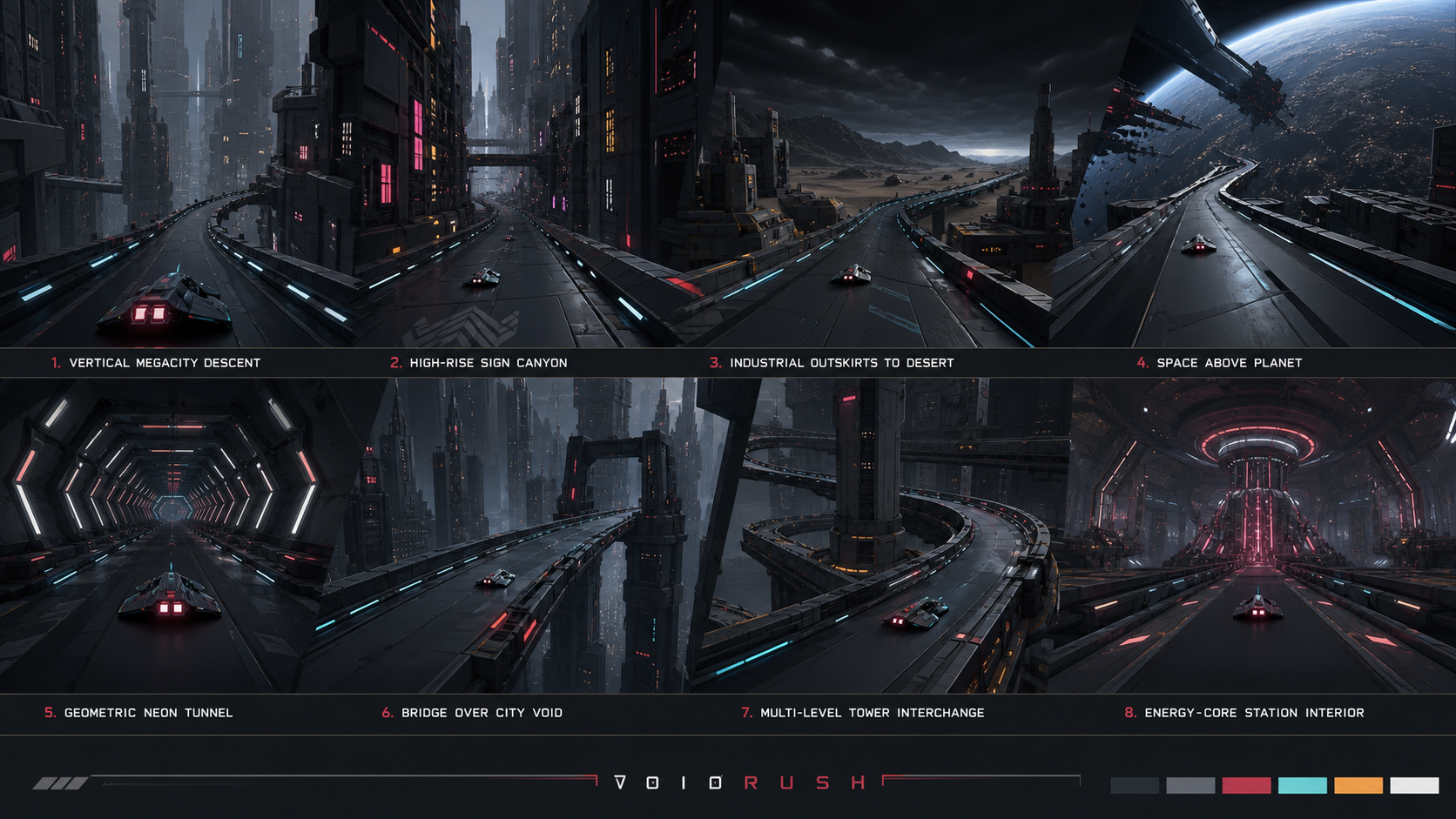
 CONCEPT ART / NOT GAMEPLAY
DESCEND THROUGH DENSITY.
Stacked roads and dark towers frame the route as a narrow, moving corridor.
HIGH-SPEED PCVR / 05
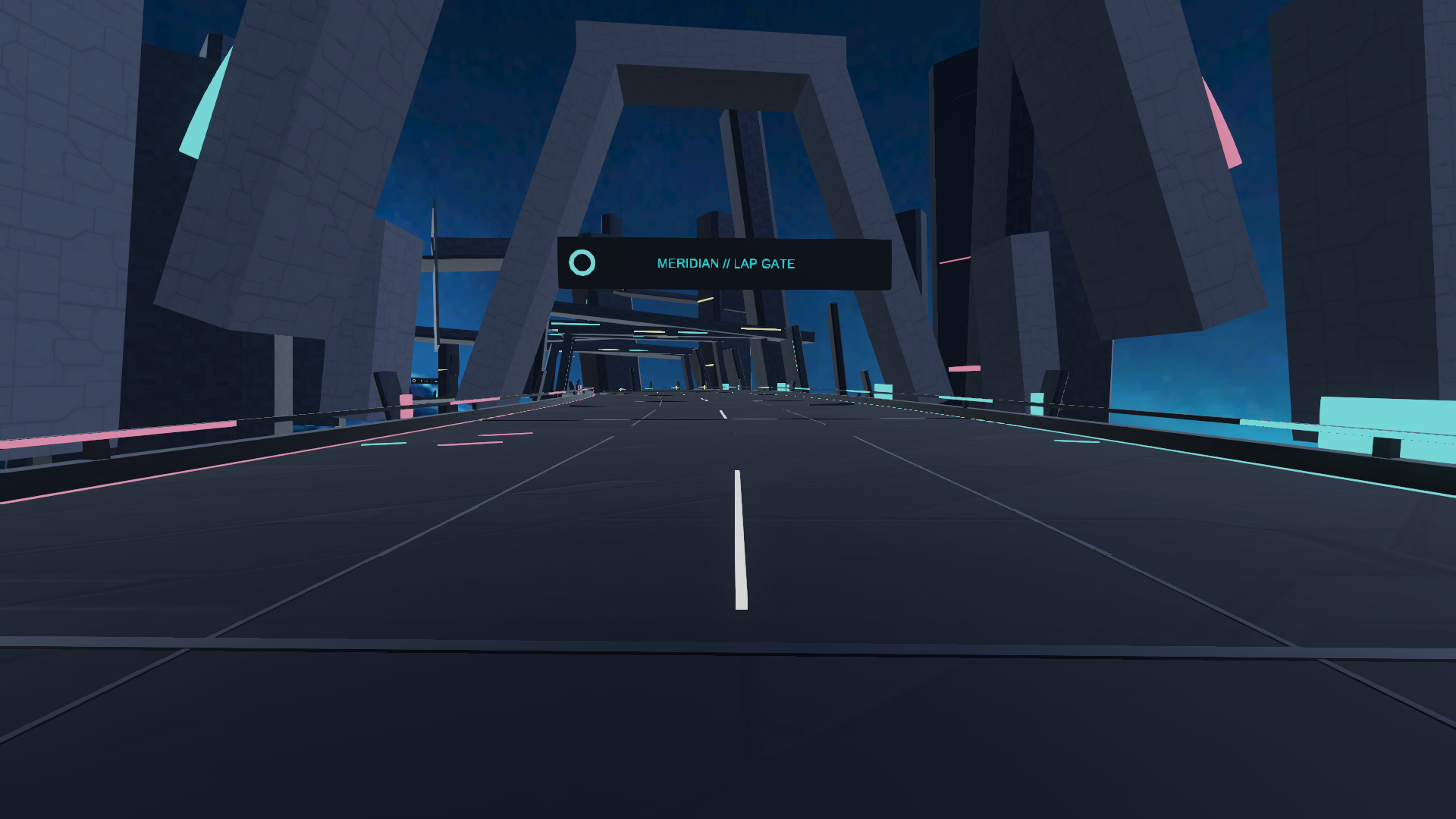 REAL UNITY BUILD / PCVR / 120 HZ TARGET
Race the void. Hold the frame.
Void Rush is a Windows x64 PCVR prototype built in Unity 6.5 with C#, URP and OpenXR. A deterministic 120 Hz track-relative motor drives the four-kilometre race while desktop telemetry records the evidence needed to qualify headset performance.
THE GAME / 05
Void Rush is a high-speed anti-gravity racing game in development for PCVR. Its four-kilometre circuit, deterministic 120 Hz motor and stabilized seated presentation are being engineered for Meta Quest 3 through Meta Horizon Link, with a high-resolution 120 FPS target that leaves only 8.33 milliseconds for every stereo frame.
014,022.7-metre closed anti-gravity circuit
02Deterministic track-relative racing motor
03Seated OpenXR presentation for Meta Quest 3 Link
04120 Hz performance target with built-in telemetry and qualification gates
Run the Windows PCVR build through a wired Meta Horizon Link connection to Meta Quest 3.
Feed the track-relative motor and build speed along the four-kilometre closed circuit.
Read the elevated line, commit to the camber and keep the seated horizon stable through the turn.
Use the remaining road and frame budget to push the pod into the next district without dropping the rhythm.
Void Rush is a high-speed anti-gravity racing game in development for PCVR. The current prototype sends a seated pilot through a four-kilometre elevated circuit built around banking, boost and a continuous sense of forward pressure.
The experience is being developed in Unity for Meta Quest 3 through a wired Meta Horizon Link connection. It is a PCVR project rather than a standalone Quest build.
The target is 120 frames per second at a high Link render resolution. That leaves only 8.33 milliseconds to simulate the race, render two high-resolution views and deliver them to the headset without losing tracking stability or visual clarity.
Speed is not only the subject of the game. It is the constraint behind every system.
The current in-engine circuit begins with a wide, readable gate designed for speed and stereo depth.
UNITY / PCVR / REAL CAPTUREThe playable graybox is one closed route with elevated roads, compressed city corridors, long ascents and banked turns. A track-relative motor keeps the pod deterministic at 120 Hz while the environment changes the sensation of scale around it.
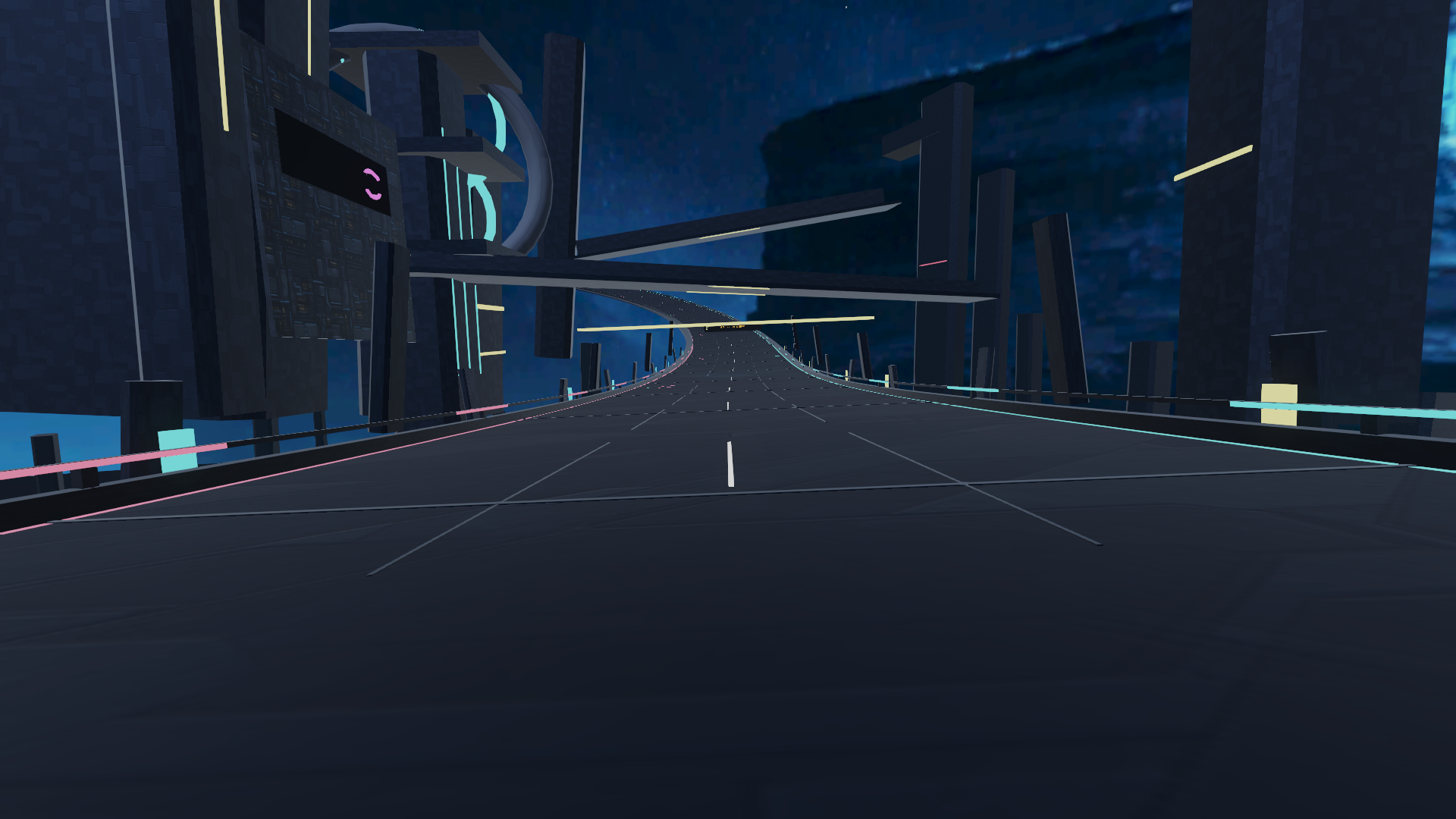
A long elevated climb opens the city and lets the upcoming line remain visible at racing speed.
ACCELERATE → READ → COMMITTrack banking, velocity feedback and spatial engine audio sell the rush, while the seated XR presentation stabilizes the pilot’s view. The challenge is to make the road feel extreme without making the headset feel careless.
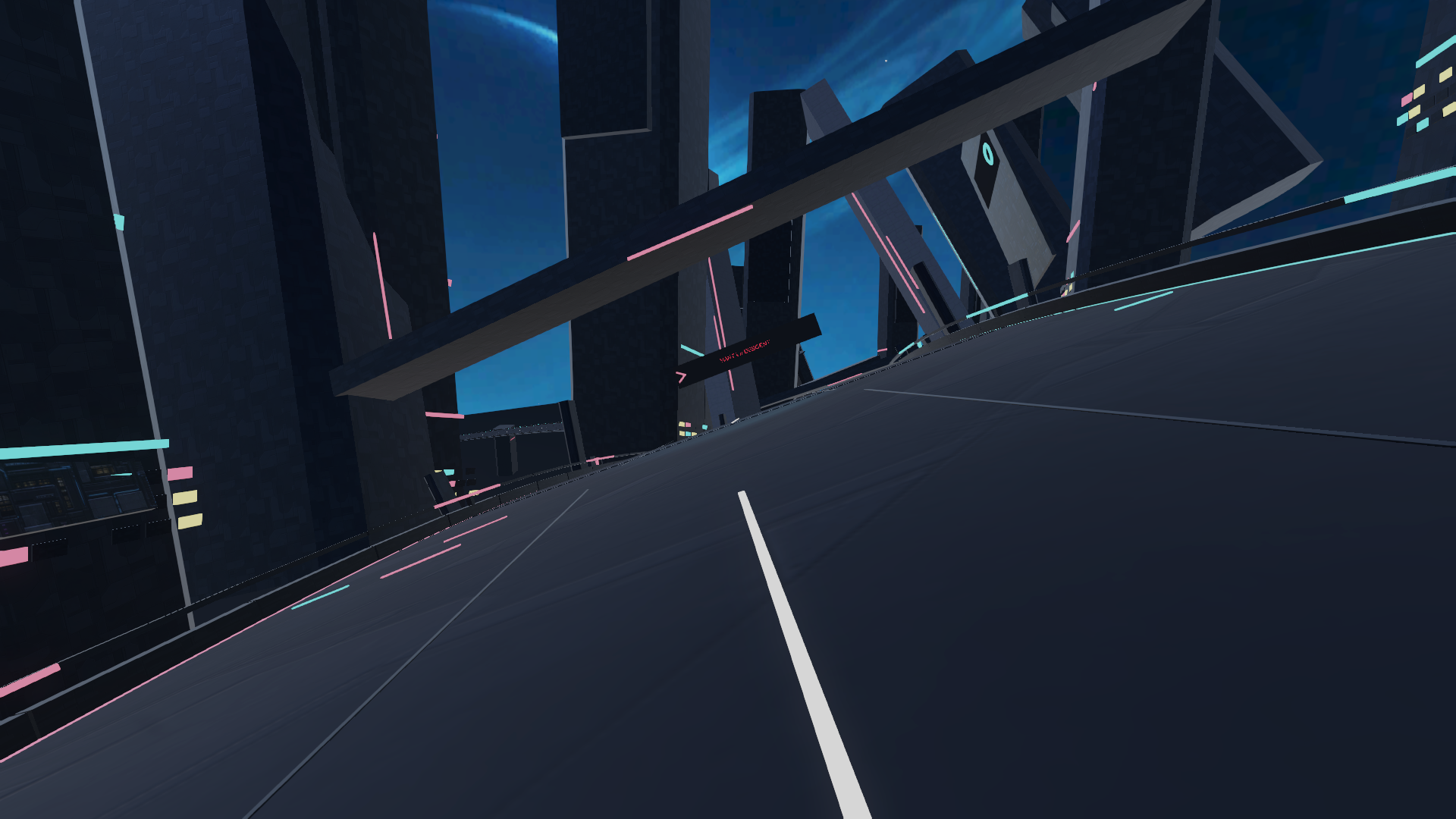
The road tilts through the vertical city while the cockpit frame keeps the racing line legible.
SEATED XR / STABILIZED VIEWRings, orbital forms, transit structures and void-spanning architecture give each section a different spatial rhythm. Cyan and magenta route lighting remain the visual thread that pulls the pilot through the whole circuit.
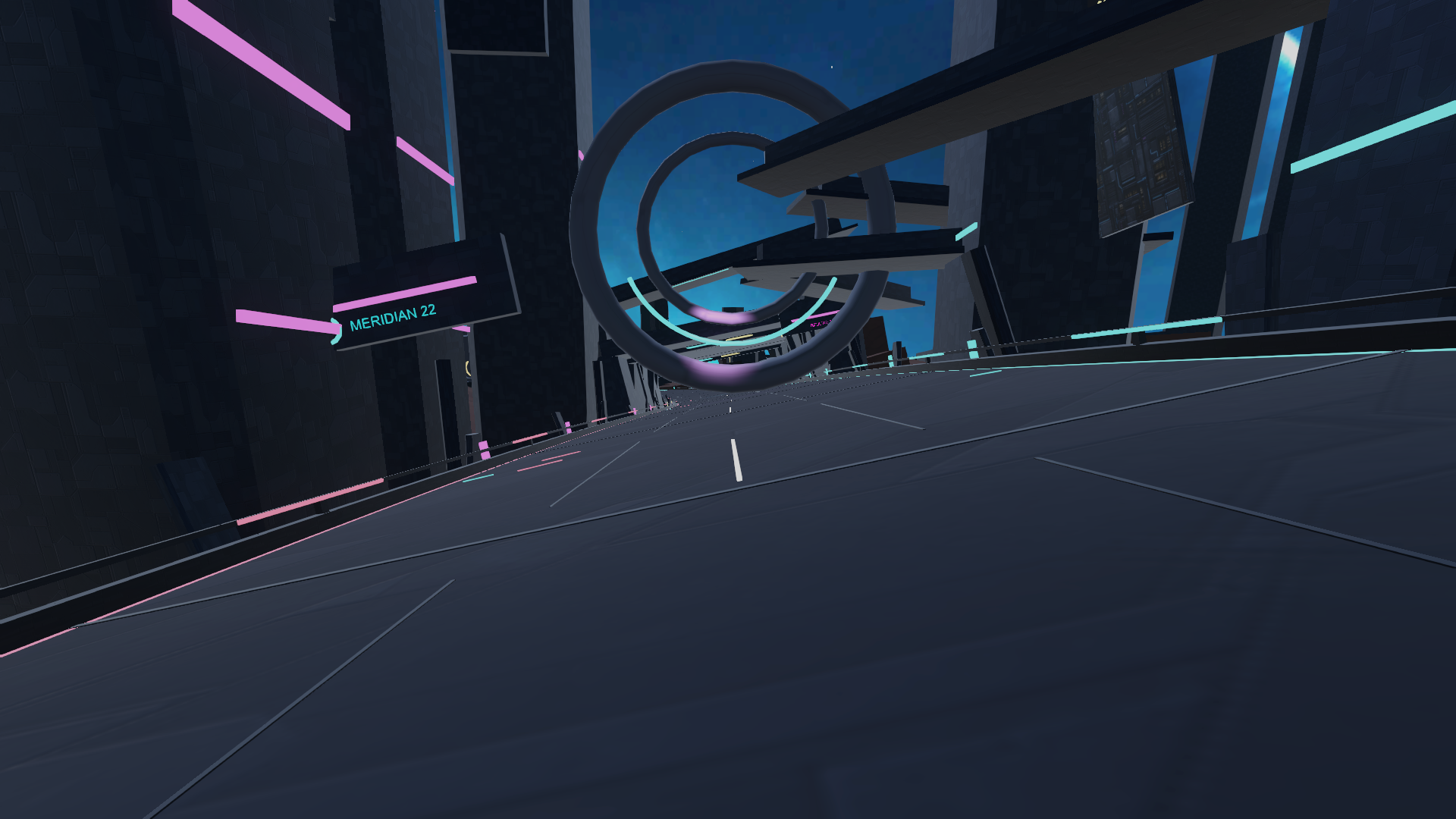
Concentric rings turn the next stretch into a depth marker before the pod reaches it.
CIRCUIT / DEPTH / DIRECTION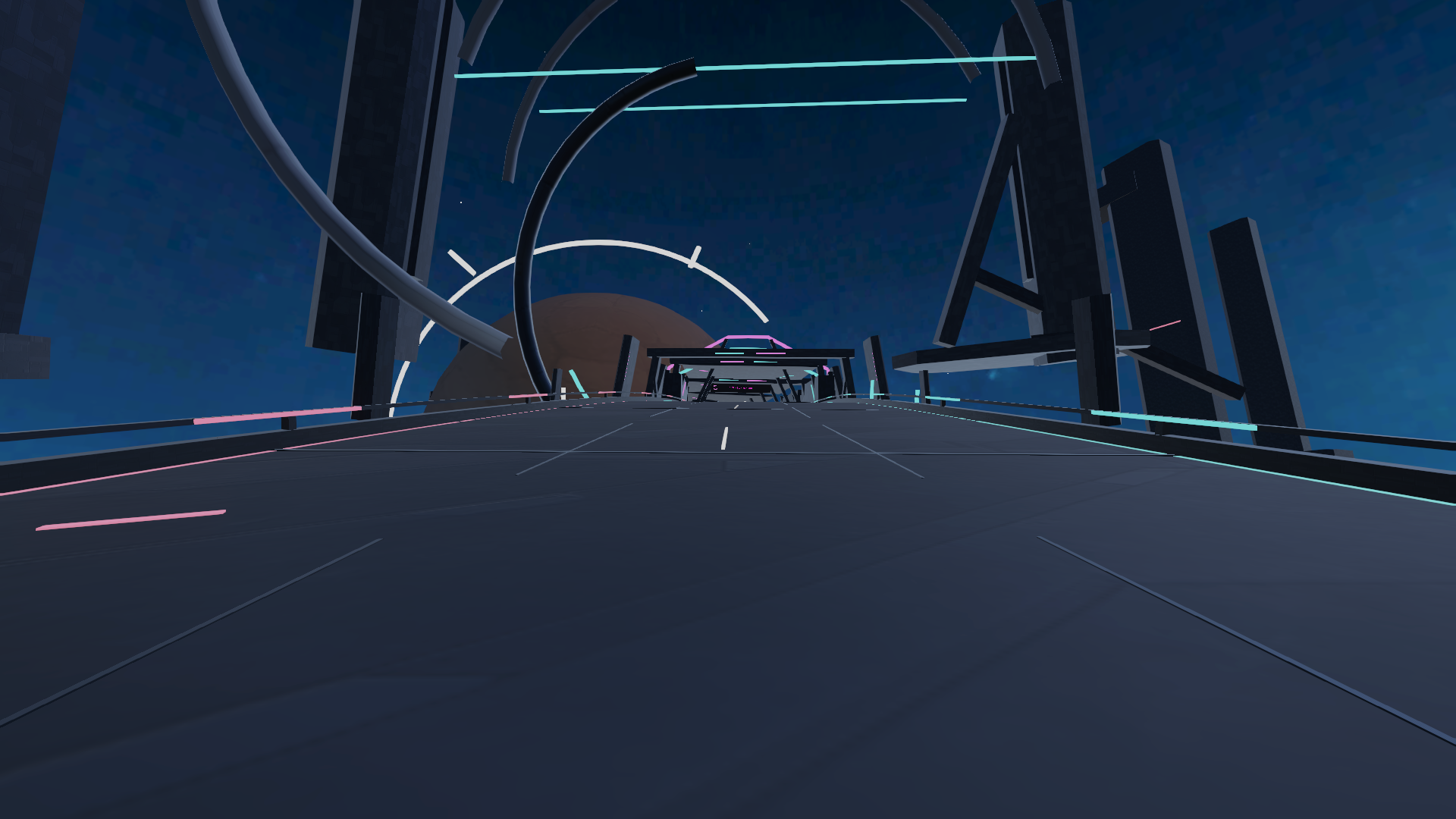
The orbital approach opens the skyline before compressing the road back into the city.
PCVR / UNITY URPThe original art-direction board explored eight spatial identities: megacity descents, sign canyons, industrial desert, orbital roads, geometric tunnels, void bridges, tower interchanges and an energy-core station. These studies establish scale, route lighting and skyline rhythm; they are visual targets, not screenshots of the current build.
CONCEPT ART / NOT GAMEPLAYStacked roads and dark towers frame the route as a narrow, moving corridor.
CONCEPT ART / NOT GAMEPLAYOrbital scale turns the racing line into a thin illuminated edge above the planet.
CONCEPT ART / NOT GAMEPLAYRepeated structure makes acceleration visible through rhythm rather than motion blur.
Automated Unity validation, desktop packaging and telemetry systems are already part of the prototype. Final 120 Hz performance, stereo comfort and sustained high-resolution Link operation still require physical Quest 3 profiling, so the game remains clearly marked as in development.
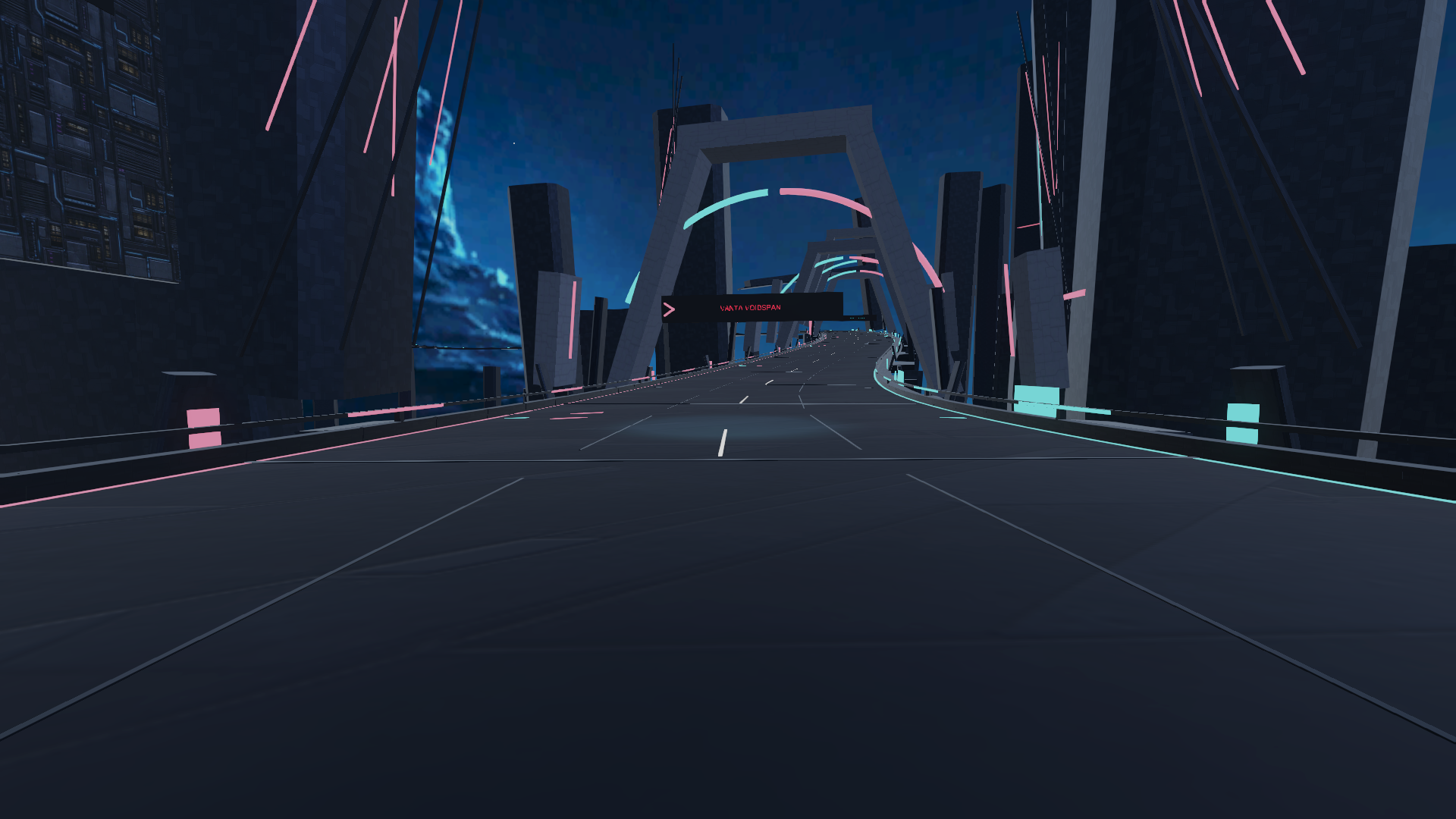
A real capture from the current production circuit, used for both visual review and performance planning.
PROFILE → VERIFY → ITERATEVoid Rush is a PCVR game in active development. The repository documents the Unity source, current race circuit, OpenXR setup, telemetry and the remaining Quest 3 hardware qualification work.
VIEW VOID RUSH ON GITHUB ↗