A gesture, not a menu.
Paint Gate, Pluck, Ramp, Duck, Sine or Steps shapes. Edit the curve, erase a section, or undo the last drawing gesture.
VIRTUAL ANALOG / VST3 + STANDALONE
Analog spirit.
Drawn into motion.
A psychedelic synthesizer with eight drawable modulation sources. Shape the tone. Draw how it moves.
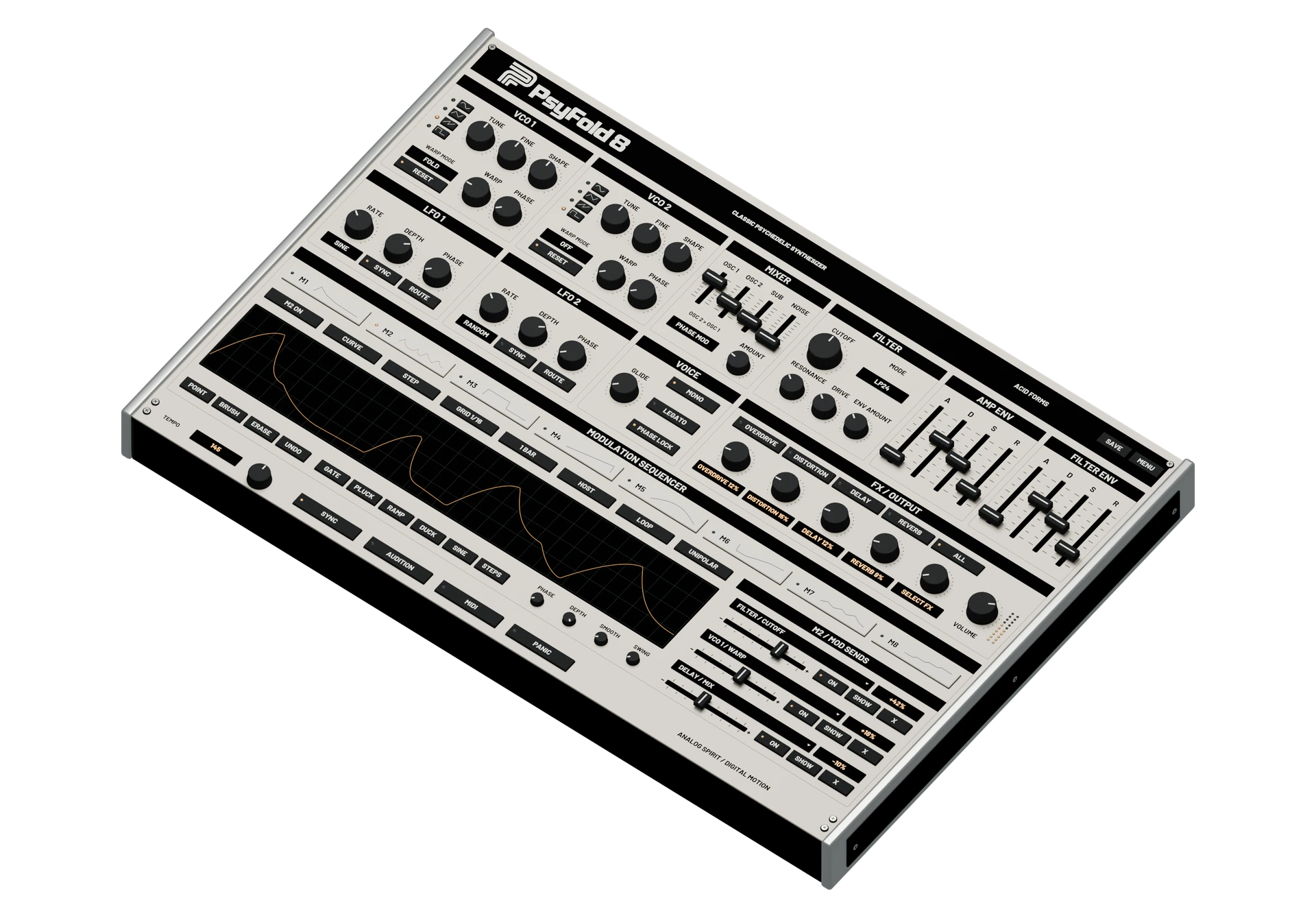
PsyFold 8 combines a C++ audio engine with JUCE for Windows VST3 and standalone builds. Its separate browser prototype uses React, TypeScript and an AudioWorklet, with Three.js for the 3D design viewer.
THE INSTRUMENT / 06
PsyFold 8 is a virtual-analog software synthesizer for psychedelic leads, basses and evolving patches. Two oscillators combine wave shaping and PM/FM with a driven filter, eight drawable modulation sources, two LFOs and four effects. Windows VST3 and standalone development builds sit alongside a browser prototype.
01Two oscillators with wave shaping, PM/FM, sub and noise
02Eight drawable modulators and two LFOs, each with three routing slots
03Eight-voice polyphony, mono, legato and glide
04Overdrive, distortion, stereo delay and algorithmic reverb
Eight independent sources turn drawn curves and step patterns into movement. Switching editors never stops the other sources: they keep shaping the patch together.
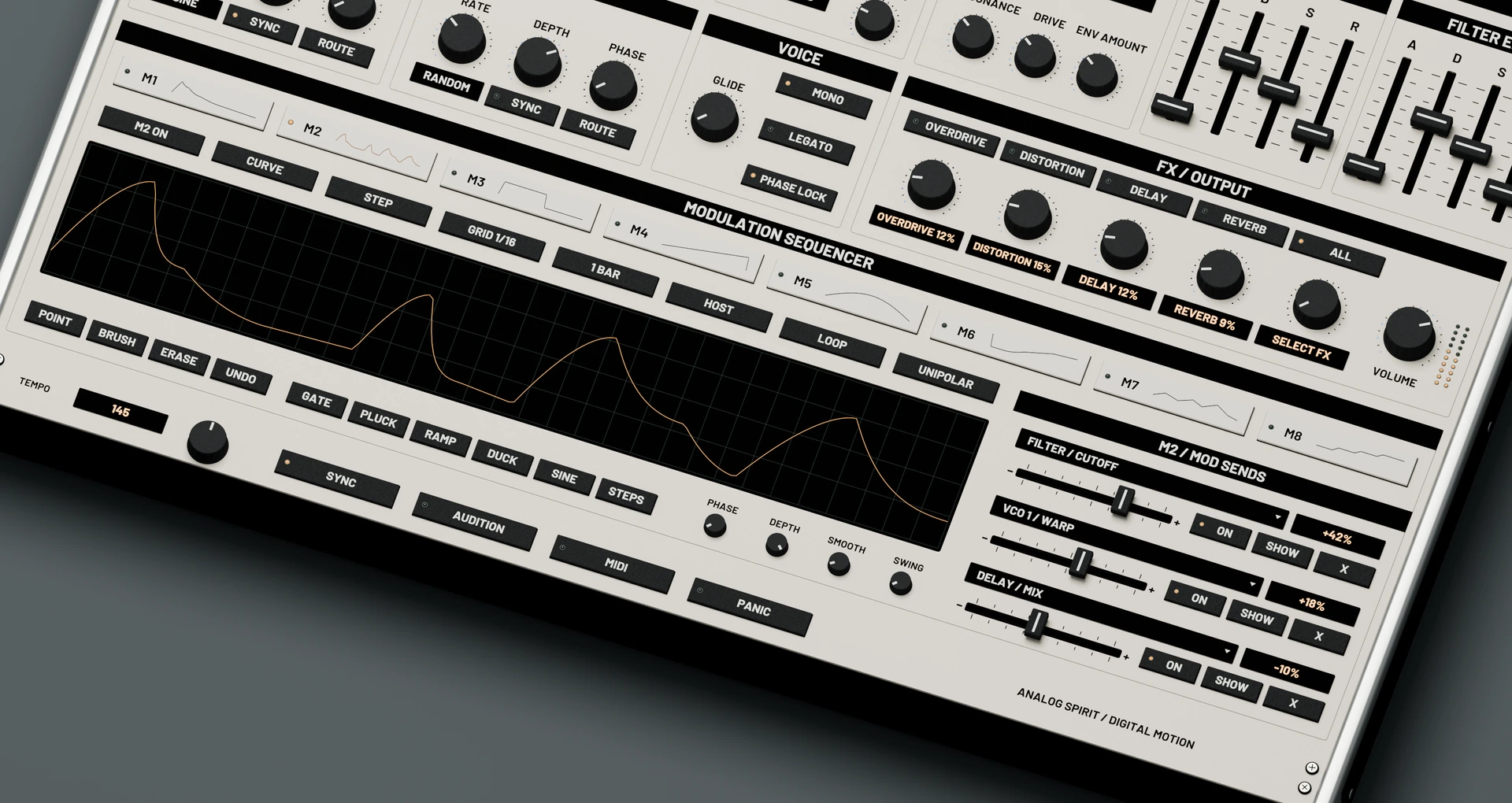
Each source has three routing slots with signed depth and individual bypass. Send one curve to the filter, oscillator warp and delay mix at the same time.
DESIGN RENDERPaint Gate, Pluck, Ramp, Duck, Sine or Steps shapes. Edit the curve, erase a section, or undo the last drawing gesture.
Choose a destination, set positive or negative depth, then bypass or clear that route without rebuilding the others.
Shape phase, depth, smoothing and swing. The native VST3 can follow host tempo and position; standalone uses its internal tempo.
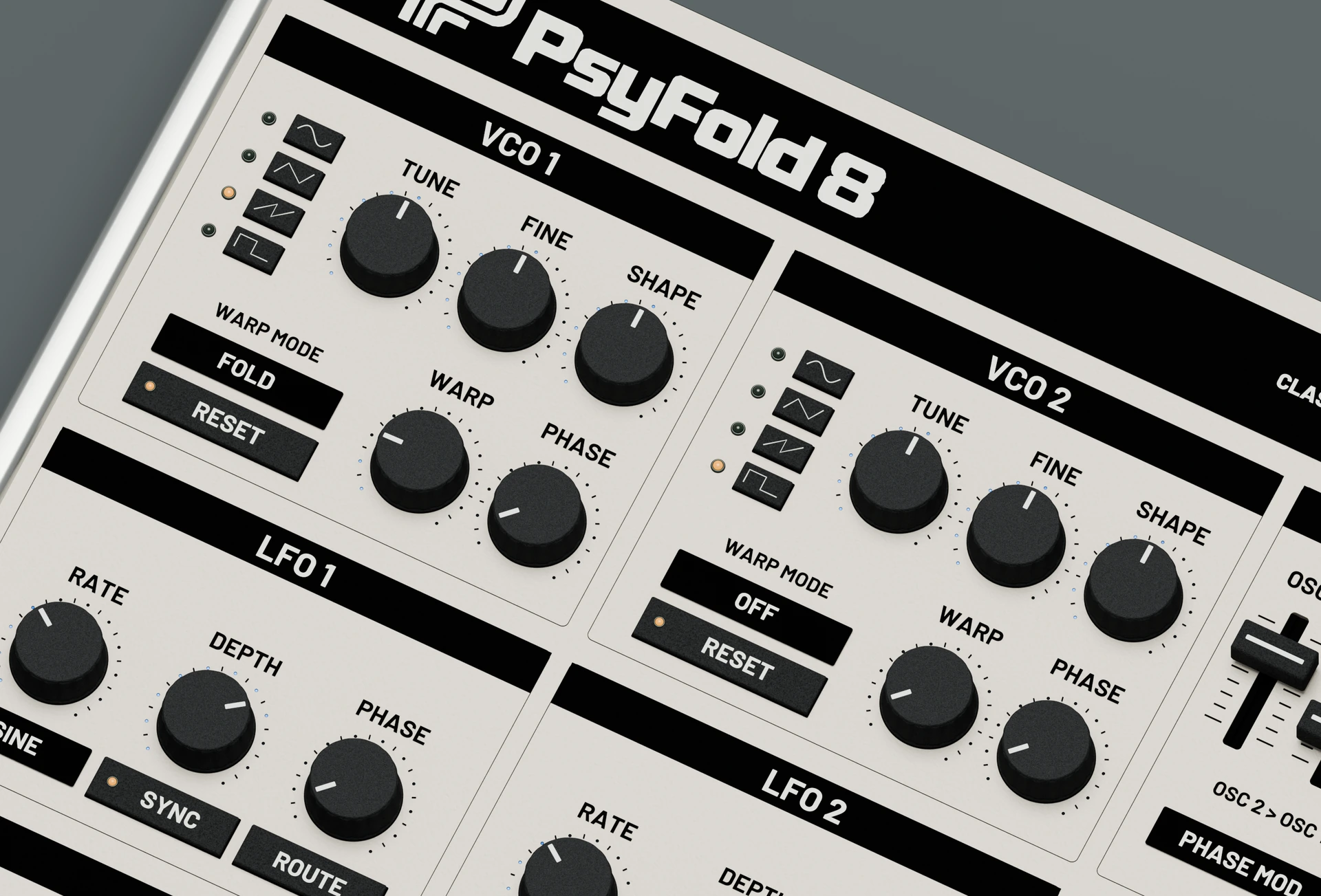
Choose saw, pulse, sine or triangle waves. Explore sync, fold, bend, mirror and formant shaping, then bring in PM/FM cross-modulation. Sub and noise have their own mixer levels.
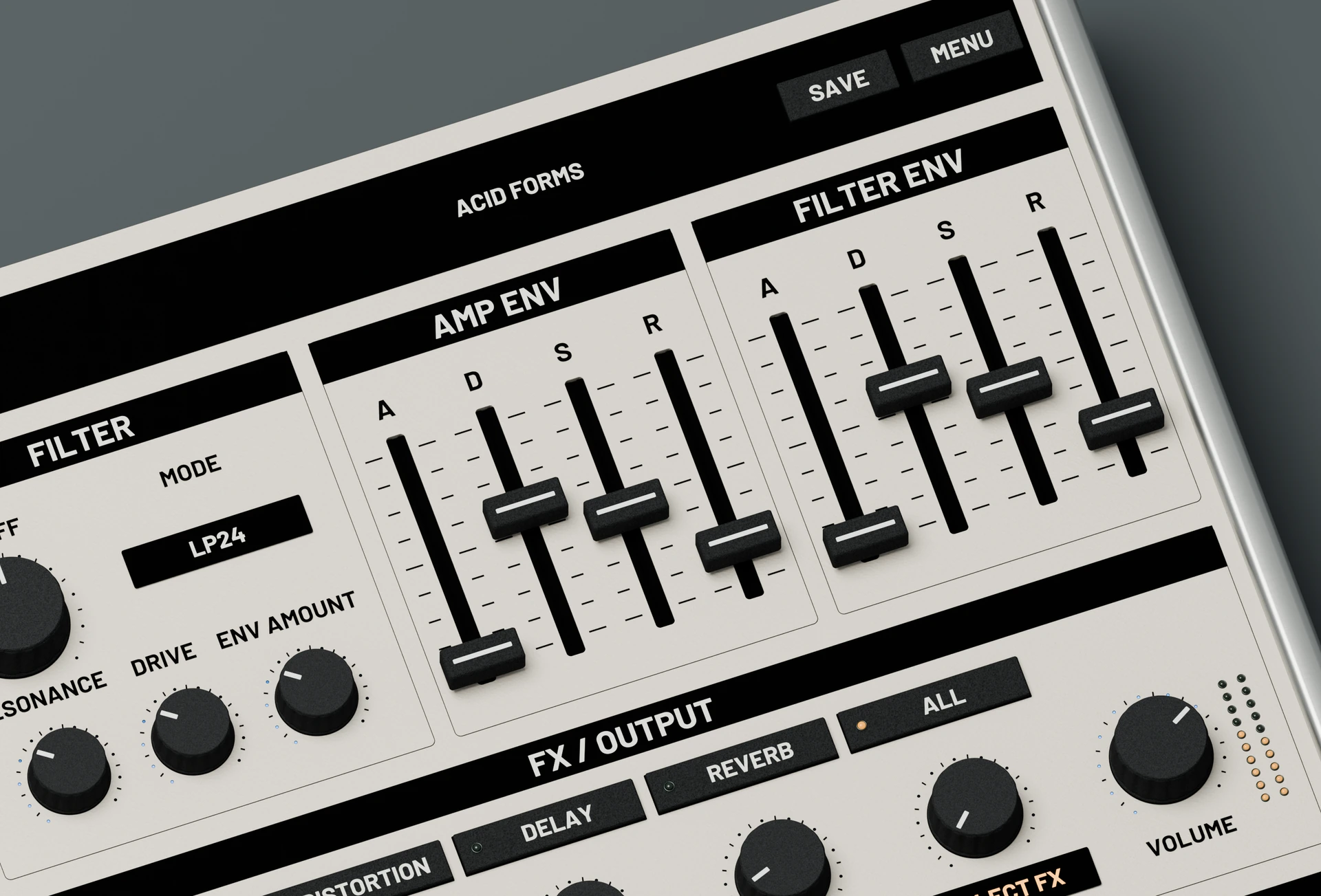
A driven multimode filter sets the tone. Separate AMP and FILTER ADSR envelopes control level and cutoff. Play up to eight voices, or switch to mono, legato and glide for connected lead lines.
Overdrive, distortion, delay and reverb can run together. Gating happens before the effects, so echoes and reverb can continue between pulses.
Add weight with drive, tone and low-cut controls. Balance the result with independent mix and level.
TUBE / TAPE / DIODEPush the waveform further. Change the clipping character, introduce bias, and blend it back into the patch.
SOFT / HARD / FOLD / RECTIFYSet the repeat time and feedback, filter the echoes, then send them across the stereo field.
STEREO / PING-PONGSet decay, pre-delay and damping. Keep the space dark or open it up around the dry sound.
ROOM / HALL / PLATE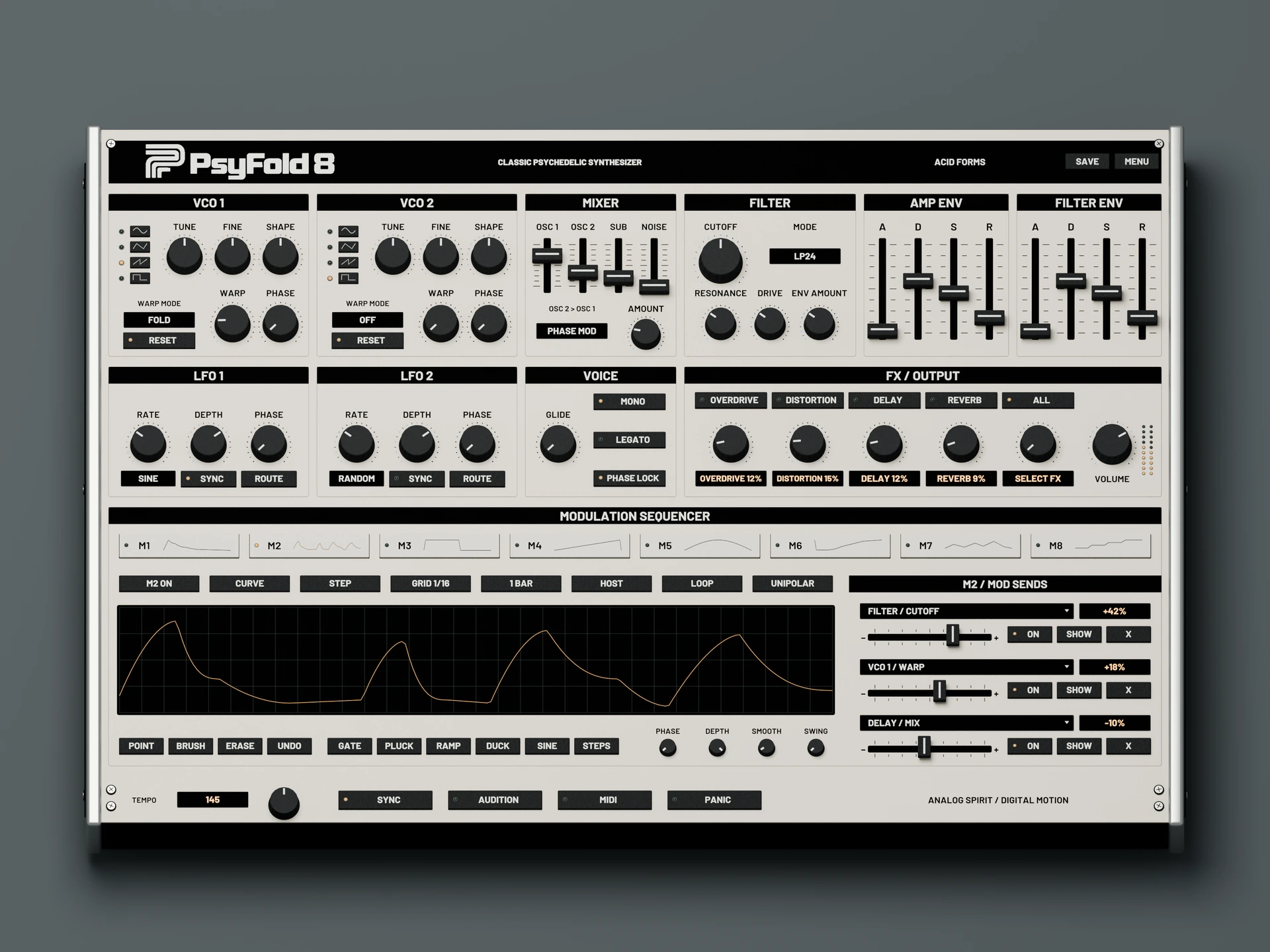
Save the sound with its curves and routing intact. Native patches use .psyfold files and DAW state recall; the browser prototype exports .psyfold.json presets.
DESIGN RENDERPlay notes from a MIDI keyboard or the computer keyboard. Hold Audition to test a sound; use Panic to clear held notes and effect tails. Standalone exposes audio and MIDI settings; the VST3 uses its host’s devices.
Native patch files and DAW state include the modulation curves and routes. The browser prototype saves locally and imports or exports its own JSON preset format.
PsyFold 8 has Windows VST3 and standalone development builds, plus a browser prototype. No public download is offered here yet.
The renders show the current design model. The standalone has the newer panel artwork; the existing VST3 build still uses earlier artwork.
Real-DAW and physical audio/MIDI hardware testing are still pending. MPE, pitch bend, MIDI learn, oversampling and sample-accurate host parameter automation are not implemented. Extreme warp, FM and distortion settings can introduce aliasing. The native and browser engines share an architecture, but are not certified to sound sample-identical.